
A Decade of Discovery: Uncovering the Hidden Story of King Harold
What if the story of 1066 is not what we have been told? Could King Harold Godwynson have survived the Battle of Hastings—and has his burial site been hidden in plain sight for centuries? My musings explore a decade-long investigation sparked at Waltham Abbey, uncovering fresh evidence from medieval carvings, wall paintings, and forgotten records, and reexamining the mysterious figure long dismissed as Harold’s “nurse.”
MUSINGS OF TOM BURKE
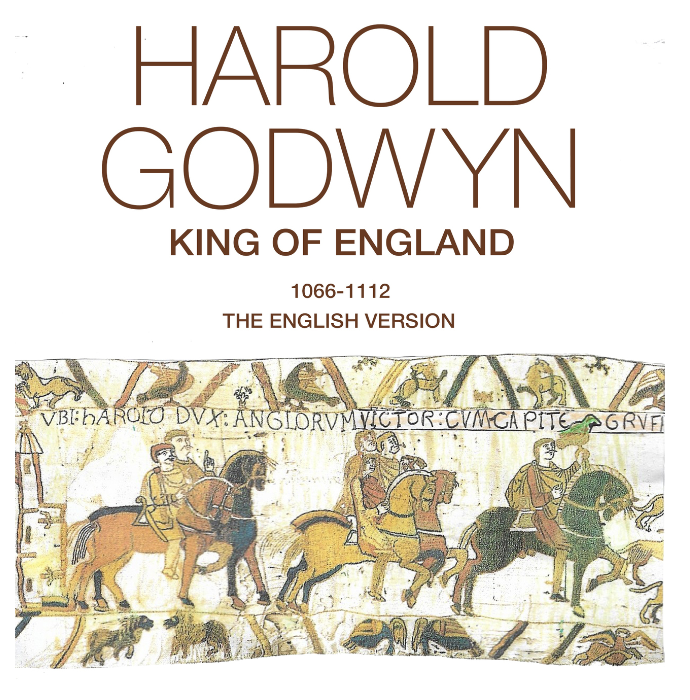
In 2014, a chance discovery at Waltham Abbey set in motion a decade-long investigation that challenges one of England’s most enduring historical narratives. As a writer, historian, and trained stonemason, I have spent years examining physical evidence, symbols, and overlooked details from the 11th century—work that has led me to a remarkable conclusion.
Through close analysis of ancient carvings within the abbey walls, I believe I have identified the long-lost burial site of King Harold Godwynson, England’s last Saxon king. For over 900 years, his final resting place has remained unknown, shrouded in myth following the Battle of Hastings in 1066.
My research goes further. It also points to the identity of the so-called “mythical nurse” said to have cared for Harold after the battle—a figure long dismissed as legend. Evidence uncovered in medieval wall paintings and hidden documents suggests she was very real, and her story forms part of a wider, untold narrative of Harold’s survival and later life.
These findings are explored in two books. The first, Harold Godwyn, King of England 1066–1112, documents the investigative journey from the initial discovery at Waltham Abbey to the identification of key figures depicted in a 12th-century Saxon-style wall painting near Canterbury. The second, The Saxon, is a historical novel grounded in this research, bringing the story to life for a wider audience.
Together, these works aim to expand our understanding of one of the most pivotal periods in English history. Drawing on newly interpreted visual and documentary evidence, they offer what could be described as a narrative counterpart to the Bayeux Tapestry—an alternative perspective on the events surrounding 1066 and their aftermath.
As interest grows in this era, particularly with renewed attention on the Bayeux Tapestry, these books provide readers with a fresh and thought-provoking lens through which to view the past.
The research happened first. The story came after.
Correspondence
hello@tomburkeauthor
Press and event enquiries welcome
(C) 2026 Tom Burke [Author]